Religious Education and World Views
Religion and Worldviews at Lighthouse Schools Partnership
At Lighthouse Schools Partnership Religion and Worldviews plays a vital role in helping pupils make sense of the world and their place within it. Rooted in the principles of the Church of England Statement of Entitlement for Religious Education (2026) and guided by the RE Council’s National Content Standard for RE (2023), our curriculum enables pupils to explore questions of meaning, purpose and value in a safe, reflective and intellectually challenging environment.
Aims
The aims of Religion and Worldviews at Lighthouse Schools Partnership are to enable pupils to:
- Know about and understand religion and worldviews, developing knowledge and understanding of Christianity and other principal religions and non-religious worldviews represented in the UK.
- Express ideas and insights about the nature, significance and impact of religion and belief on individuals, communities and society.
- Gain and deploy the skills needed to engage thoughtfully with religious, philosophical and ethical questions, reflecting on their own beliefs, values and experiences in light of their learning.
Our curriculum prepares pupils to navigate the rich diversity of religious and non-religious worldviews they may encounter at school, within their local communities and throughout their lives. Pupils build their understanding of how religion and non-religion shape human experience, exploring beliefs, teachings, traditions, practices and the lived experiences of individuals and communities. Through this learning, they develop an informed understanding of the role religion and worldviews play in contemporary Britain and the wider world.
At Lighthouse Schools Partnership, Christianity is taught in depth as the principal religion of the United Kingdom and as a global faith followed by billions of people across diverse cultures, countries and communities. Pupils explore Christianity not only through its beliefs and practices but also as a diverse and inclusive world religion, expressed in many different ways around the globe. This helps pupils appreciate the breadth of Christian experience and recognise the shared values of dignity, compassion, justice and respect that underpin many Christian traditions.
 Alongside Christianity, pupils encounter a range of world faiths and non-religious worldviews, fostering curiosity, empathy and respect for different ways of understanding life. In EYFS, pupils study Christianity and Islam and learn about people of other faiths as part of their growing sense of self, community and belonging. In KS1, pupils study Christianity, Islam, Judaism and Humanism. In KS2, pupils study Christianity, Islam, Judaism, Hinduism and Humanism.
Religion and Worldviews is not about promoting a particular belief system. Rather, it enables pupils to develop religious literacy, equipping them to understand and engage respectfully with the diverse beliefs, values and traditions that shape our society. It provides a space to reflect, question and think critically while developing their own sense of identity, belonging and purpose. Through this learning, pupils are encouraged to value diversity, challenge prejudice and recognise the contribution that religious and non-religious worldviews make to flourishing communities and to life in modern Britain.
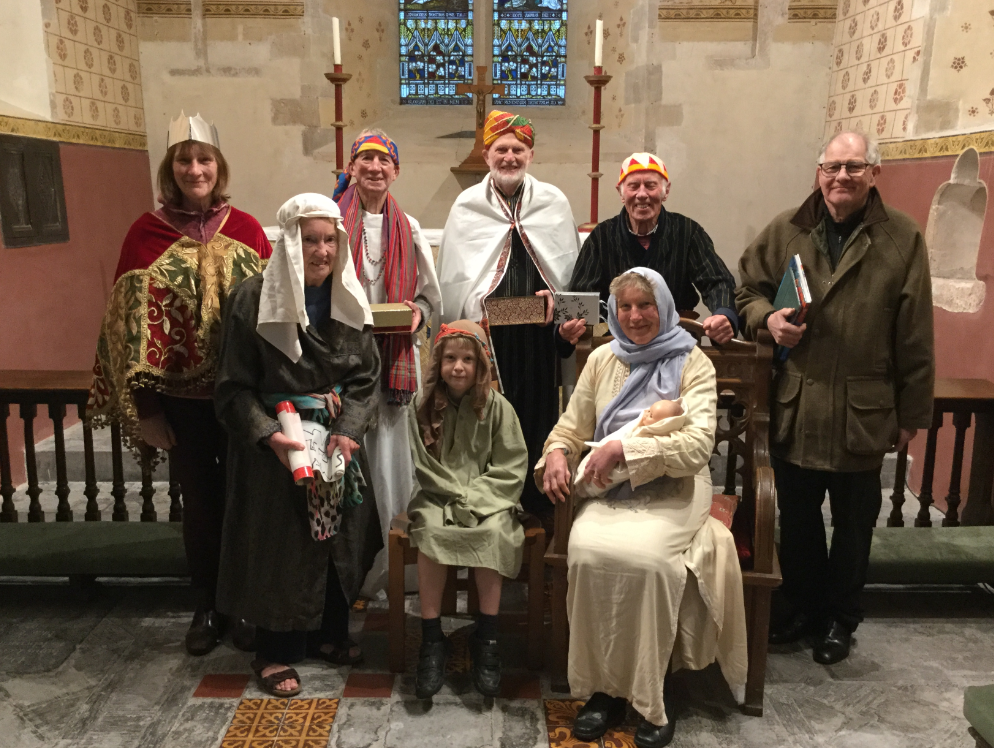
Once a term, children enjoy a visit from members of our church community ‘Open the Book’, who act-out stories from the Bible. This photo shows the re-enactment of the Three Wise Men celebrating the joy of the birth of Jesus.